INSIDE TB PROPERTIES BUYS LAND SERIES:
Making an offer is one step. Making sure the deal can close is another.
An offer has been made. The numbers make sense. The property appears to fit what we’re looking for.
So, what happens next?
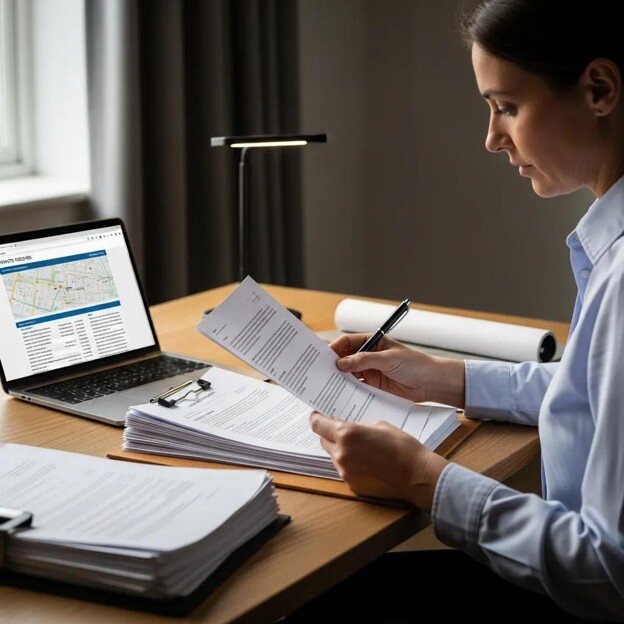
Before moving forward with a land purchase, there may be additional research and verification needed to make sure the property details are accurate, the ownership can be properly established, and there are no unexpected issues that could interfere with closing.
At TB Properties Buys Land, we believe a professional land purchase involves more than agreeing on a price. It means taking the time to understand the property and identify questions that need to be addressed before the transaction moves forward.
Whether a property is located in Callahan County, TX, a rural community in Arkansas or Oklahoma, or another part of the United States, due diligence helps bring important details into focus.
Here are some of the things that may need to be verified.
1. Confirming Property Ownership
One of the first questions is straightforward: Who legally owns the property?
Ownership can be more complicated than it initially appears. A property may have multiple owners, have been inherited by several family members, or still be titled in the name of someone who has passed away.
For example, a landowner in Callahan County, TX may believe they have authority to sell an inherited parcel, only to discover that additional heirs or estate-related documentation may be involved.
Depending on the circumstances, ownership research may involve reviewing:
- Current ownership and vesting information
- Recorded deeds and prior transfers
- Multiple owners or co-owners
- Inherited ownership and estate-related documentation
- Whether the person signing the agreement has the necessary authority
Getting ownership details right early can help prevent delays and confusion later.
2. Verifying the Legal Description
A property address or parcel identification number is helpful, but it is not always enough to identify exactly what is being purchased.
The legal description is used to identify the property in recorded real estate documents. It helps distinguish the actual parcel from neighboring land and provides an important reference for the transaction.
We may need to compare information from sources such as:
- Recorded deeds
- County appraisal district or assessor records
- Parcel maps
- Survey documents, when available
- Title-related records
This can be especially important with rural land, irregularly shaped parcels, older property divisions, and properties that have been divided or transferred over many years.
A parcel in [market_county] County may appear straightforward on an online map, but the recorded legal description is what helps establish exactly which property is involved.
3. Checking Property Taxes and Potential Liens
Unpaid property taxes and certain liens or other recorded obligations can affect a real estate transaction.
As part of the review, tax status and title-related records may need to be examined to identify outstanding amounts or other issues that could require attention before closing.
Questions may include:
- Are property taxes current?
- Are there delinquent taxes?
- Are there recorded liens against the property?
- Are there other financial obligations or claims that may affect title?
- Will anything need to be paid, resolved, or addressed at closing?
For landowners throughout the United States, tax records and lien procedures can vary by state and county.
A property in Callahan County, TX may have a different set of requirements than a parcel in rural Oklahoma, Florida, or another market. Understanding those details helps everyone know what needs to happen before the transaction can be completed.
4. Reviewing Access
Access is one of the most important considerations when purchasing vacant land.
A parcel may appear to sit next to a road, but that does not automatically establish that it has legally recognized access. Physical access and legal access are two separate considerations.
Depending on the property, additional research may involve:
- Reviewing recorded access easements
- Examining deeds and other recorded documents
- Looking at road frontage and surrounding parcels
- Determining whether access is physical, legal, or both
- Identifying questions that may require further review
This is particularly relevant for rural properties in Callahan County, TX, and other areas where parcels may be accessed through private roads, shared driveways, or easements.
Access questions do not necessarily mean a property cannot be purchased. They do mean the details should be understood before moving forward.
5. Identifying Easements, Restrictions, and Other Property Matters
Land can have recorded conditions or limitations that are not obvious from looking at the property.
Easements, deed restrictions, rights-of-way, and other recorded matters may affect how a property can be accessed or used.
Depending on the parcel, research may include reviewing:
- Utility or access easements
- Recorded restrictions or covenants
- Rights-of-way
- Existing agreements affecting the property
- Other matters disclosed through title research
These details can be particularly important when evaluating vacant land in growing areas, rural communities, and developing markets across the United States.
The goal is not to assume every property has a problem. It is to identify relevant details so the purchase can move forward with a clearer understanding of what is being acquired.
6. Working Through Title-Related Questions
Title review brings many of these details together.
A title company may conduct a title search, identify recorded matters affecting the property, and help determine what documentation or corrective steps may be necessary before closing.
Occasionally, questions arise involving older deeds, incomplete ownership records, name discrepancies, probate matters, unreleased liens, or other issues that need additional attention.
Not every issue prevents a sale. Some may be resolved through additional documentation or other steps coordinated with the title company. Others may require more time or further investigation.
This is one reason we value a clear, professional closing process. Identifying title-related questions early gives the parties an opportunity to understand what is needed rather than discovering an unexpected issue at the last minute.
7. Making Sure the Details Come Together
Due diligence is not simply a checklist. It is the process of bringing the important property and transaction details together.
The amount of research needed depends on the parcel. A straightforward property with clear ownership and readily available records may require less follow-up than an inherited property with multiple owners, a parcel with access questions, or land with a complicated ownership history.
For sellers in Callahan County, TX and throughout the United States, the important thing to understand is that additional questions after an offer are a normal part of many real estate transactions.
Sometimes we may need additional documents, clarification, or time for a title company to review a particular issue. That does not automatically mean something is wrong. It means the details are being examined before the transaction proceeds.
Why This Matters to Landowners
Selling vacant land should not leave you wondering what is happening behind the scenes.
A buyer’s initial offer is an important milestone, but a successful transaction also depends on verifying the property, understanding ownership, identifying potential title issues, and making sure the necessary closing requirements can be satisfied.
At TB Properties Buys Land, we believe sellers deserve clear communication throughout that process. If a question comes up, we want it addressed directly so everyone understands what is needed and what comes next.
Whether your property is in Callahan County, TX, somewhere else in Missouri, Tennessee, or across the country, the goal remains the same: understand the property, work through the details, and move toward a professional closing.
An offer starts the conversation. Due diligence helps move the transaction toward the finish line.
If you own vacant land and are considering selling, we would be happy to learn more about your property and explain how our purchase process works.
TB Properties Buys Land
Direct land buyers. Clear communication. Professional closings.
Inside TB Properties Buys Land: Real process. Clear answers. A closer look at how we buy land.